

In today’s high-speed global trade landscape, success depends on visibility, accuracy, and operational agility. Businesses can no longer rely on delayed updates or manual tracking methods. That’s why RFID is becoming a cornerstone of modern logistics.
From tracking shipments in real time to automating warehouse processes, RFID is reshaping how supply chains operate. Unlike traditional barcode systems that require manual scanning and line-of-sight access, RFID enables automatic, simultaneous data capture — delivering faster and more reliable insights.
For organizations aiming to reduce errors, increase transparency, and boost efficiency, RFID offers a practical and scalable solution.
In This Content
What Is RFID in Supply Chain & Logistics?
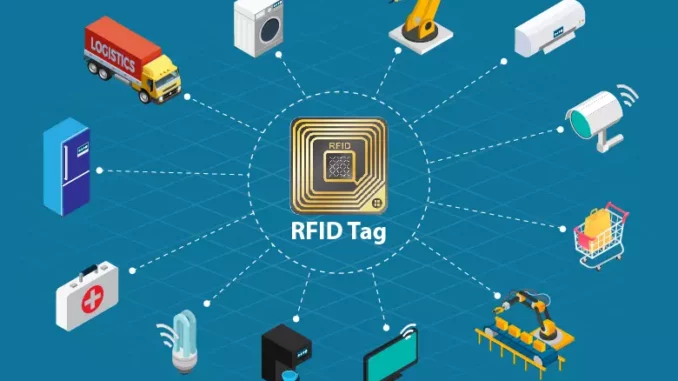
Radio Frequency Identification (RFID) uses electromagnetic fields to identify and track tags attached to objects. A typical RFID system includes:
-
RFID tags (attached to items, pallets, or assets)
-
RFID readers (that capture tag data wirelessly)
-
Software platforms (that process and integrate the data)
Because RFID doesn’t require direct scanning like barcodes, multiple items can be read at once. This enables faster processing in warehouses, distribution centers, and transportation hubs — while providing real-time visibility across the supply chain.
Why RFID Matters Today
Modern supply chains are more interconnected and complex than ever. Companies must:
-
Ensure timely deliveries
-
Maintain accurate inventory levels
-
React quickly to disruptions
-
Meet compliance standards
RFID supports these goals by reducing manual dependencies and providing continuous, real-time insights. With better data, businesses can forecast demand more accurately, minimize shrinkage, and optimize operations with confidence.
Key RFID Use Cases in Supply Chain and Logistics
1. Inventory Management & Real-Time Tracking
RFID eliminates manual stock counting and allows continuous monitoring of inventory levels. Businesses can track item movement instantly, reducing discrepancies and preventing stockouts or overstocking.
Warehouse teams can locate products faster, improving productivity and order accuracy.
2. Warehouse Automation
RFID gates automatically record products as they move in and out of storage areas — no manual scanning required.
Benefits include:
-
Faster processing times
-
Reduced labor costs
-
Higher data accuracy
-
Seamless integration with warehouse management systems (WMS)
Smart warehouses powered by RFID operate with greater precision and efficiency.
3. Asset Tracking & Equipment Monitoring
Logistics companies manage high-value assets such as pallets, containers, forklifts, and tools. RFID helps track these resources across facilities and routes.
This improves asset utilization, reduces loss or theft, and provides data on usage patterns to support smarter resource allocation.
4. Shipment Visibility
RFID enables end-to-end shipment tracking — from dispatch to final delivery.
Real-time visibility helps companies:
-
Provide accurate delivery estimates
-
Respond quickly to delays
-
Improve collaboration between supply chain partners
-
Enhance customer satisfaction
Transparency builds trust and operational control.
5. Retail & Omnichannel Fulfillment
Retailers use RFID to synchronize inventory across warehouses and stores. This ensures accurate stock levels for online and in-store purchases.
RFID supports:
-
Faster order fulfillment
-
Reduced shrinkage
-
Improved replenishment planning
-
Better customer experiences
In omnichannel environments, inventory accuracy is critical — and RFID delivers it.
Core Components of an RFID System
A successful RFID ecosystem includes:
-
Tags: Store unique identification data
-
Readers: Capture tag information wirelessly
-
Middleware: Filters and processes data
-
Enterprise Integration: Connects RFID data to ERP, WMS, and SCM systems
This integration creates a real-time data environment that supports informed decision-making across operations.
Step-by-Step RFID Implementation Strategy
Step 1: Define Clear Objectives
Identify measurable goals — such as improving inventory accuracy or reducing shrinkage.
Step 2: Select the Right Technology
Choose hardware and software suited to your operational environment.
Step 3: Conduct Pilot Testing
Run small-scale trials to validate performance and identify challenges.
Step 4: Integrate with Enterprise Systems
Ensure seamless data flow between RFID and existing ERP or warehouse systems.
Step 5: Monitor & Optimize
Continuously analyze performance metrics and refine processes.
Key Benefits of RFID in Supply Chain Operations
RFID delivers measurable operational improvements:
-
Real-time supply chain visibility
-
Reduced human error
-
Faster processing times
-
Lower labor costs
-
Improved compliance and audit trails
-
Data-driven decision-making
The result is a more efficient, transparent, and responsive supply chain.
Technologies That Enhance RFID
RFID becomes even more powerful when combined with:
-
IoT platforms for connected device ecosystems
-
Cloud computing for scalable data storage
-
AI and advanced analytics for actionable insights
-
ERP and supply chain systems for seamless integration
Together, these technologies enable smarter logistics networks.
Common Implementation Challenges
While RFID offers clear benefits, organizations must address:
-
High upfront investment costs
-
Integration complexity with legacy systems
-
Environmental interference (metal, liquids, signal disruption)
-
Need for employee training
-
Managing large volumes of real-time data
Strategic planning helps mitigate these risks.
Best Practices for Successful Adoption
-
Start with defined business objectives
-
Launch pilot projects before scaling
-
Select hardware based on environment conditions
-
Ensure strong IT integration planning
-
Train staff thoroughly
-
Monitor performance continuously
A structured approach maximizes ROI and long-term value.
The Future of RFID in Logistics
RFID is evolving alongside digital transformation trends. Integration with IoT, AI, and blockchain is creating smarter, more transparent supply chains.
As costs decline and capabilities expand — including battery-assisted tags and real-time location systems (RTLS) — RFID adoption is expected to grow across industries.
Conclusion
RFID is no longer an emerging concept — it’s a proven driver of efficiency and transparency in modern supply chains.
Organizations adopting RFID gain better visibility, improved operational accuracy, and stronger decision-making capabilities. For companies aiming to stay competitive in an increasingly complex logistics environment, RFID is a strategic investment in smarter, data-driven operations.
If you’d like, I can also convert this into a shorter executive summary or an SEO-optimized blog version.