
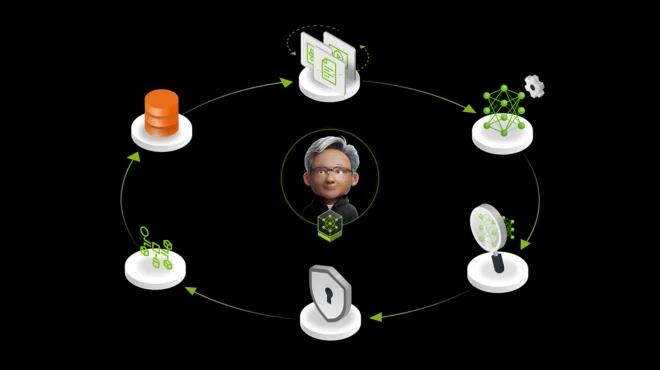

Large Language Models (LLMs) have transformed the way businesses and individuals interact with artificial intelligence. From customer service chatbots and content generation to coding assistants and data analysis, LLMs are powering a new generation of AI applications. However, achieving the best possible performance from these models often requires more than simply selecting a powerful model. Developers and organizations must decide how to adapt the model to their specific needs.
Two of the most common approaches are contextual input (prompt engineering and retrieval-based context) and fine-tuning. While both methods aim to improve the quality and relevance of AI-generated responses, they differ significantly in implementation, cost, flexibility, and use cases. Understanding these differences is essential for building efficient, scalable AI solutions.
In This Content
Understanding Large Language Models (LLMs)
Large Language Models are AI systems trained on vast amounts of text data to understand and generate human-like language. They can perform a wide range of tasks, including:
- Answering questions
- Writing articles and emails
- Summarizing documents
- Translating languages
- Generating code
- Assisting with research
- Providing customer support
Although these models are highly capable, they may lack organization-specific knowledge or struggle with specialized tasks unless additional techniques are used to guide their responses.
What Is Contextual Input?
Contextual input refers to providing an LLM with additional information at the time of a request. Instead of changing the model itself, developers supply relevant context within the prompt or retrieve information from external knowledge sources.
Common forms of contextual input include:
- Prompt engineering
- System instructions
- Few-shot examples
- Retrieved documents (Retrieval-Augmented Generation or RAG)
- Conversation history
- Company policies
- Product documentation
This method allows the model to generate more accurate and context-aware responses without modifying its underlying parameters.
Benefits of Contextual Input
Faster Deployment
Contextual input can be implemented immediately without retraining the model. Developers simply design better prompts or connect external databases.
Lower Cost
Since no model training is required, organizations avoid the significant computational costs associated with fine-tuning.
Access to Current Information
By retrieving information from external databases, APIs, or document repositories, LLMs can answer questions using the latest available data.
Greater Flexibility
Organizations can easily update knowledge by modifying documents or prompts rather than retraining the model whenever information changes.
What Is Fine-Tuning?
Fine-tuning involves further training a pre-trained language model on a specialized dataset. This process adjusts the model’s internal parameters so it becomes better at performing specific tasks or understanding domain-specific language.
For example, a healthcare organization may fine-tune an LLM using medical literature, while a legal firm may train one using legal documents and case law.
The result is a model that naturally produces responses aligned with a particular domain or style.
Benefits of Fine-Tuning
Improved Task Performance
Fine-tuned models often achieve higher accuracy on specialized tasks because they learn patterns specific to the training data.
Consistent Output Style
Organizations can train models to follow a preferred writing style, tone, or response format consistently.
Better Domain Expertise
Industries such as finance, healthcare, law, and engineering often benefit from fine-tuning because of their specialized terminology and workflows.
Reduced Prompt Complexity
Fine-tuned models usually require shorter prompts since much of the desired behavior is already embedded within the model.
Comparing Contextual Input and Fine-Tuning
Cost
Contextual input is generally more affordable because it does not require expensive GPU training or large datasets. Fine-tuning, on the other hand, involves additional computing resources and technical expertise.
Speed
Contextual approaches can often be deployed within hours or days. Fine-tuning may take days or weeks, depending on the dataset size and model complexity.
Knowledge Updates
Contextual input excels when information changes frequently. Updating a document database is much easier than retraining a model every time new information becomes available.
Performance
For highly specialized or repetitive tasks, fine-tuning often delivers better consistency and accuracy. For general-purpose applications with changing information, contextual input is usually sufficient.
Scalability
Organizations managing multiple clients or products often prefer contextual input because the same model can serve many use cases by changing the supplied context.
When to Use Contextual Input
Contextual input is ideal for applications such as:
- Customer support using company documentation
- Enterprise knowledge assistants
- Internal employee help desks
- Product recommendation systems
- Frequently updated information portals
- Research assistants
In these cases, access to current information is often more valuable than permanently modifying the model.
When Fine-Tuning Is the Better Choice
Fine-tuning works best for:
- Medical diagnosis support
- Legal document analysis
- Financial compliance systems
- Brand-specific writing assistants
- Code generation for specialized programming environments
- Industry-specific virtual assistants
These applications require deep expertise and consistent outputs that go beyond prompt engineering alone.
Combining Both Approaches
Many modern AI systems combine contextual input with fine-tuning to achieve optimal performance.
For example:
- A fine-tuned customer support model understands company terminology.
- A retrieval system supplies the latest product documentation.
- Prompt engineering ensures consistent response formatting.
This hybrid strategy offers the strengths of both methods while minimizing their limitations.
Best Practices for Optimizing LLM Performance
To maximize the effectiveness of LLMs, organizations should:
- Clearly define the intended use case.
- Start with contextual input before considering fine-tuning.
- Use high-quality, well-organized data sources.
- Continuously evaluate response quality.
- Monitor model performance over time.
- Protect sensitive information with appropriate security measures.
- Test outputs using real-world scenarios.
- Combine retrieval systems with carefully designed prompts when possible.
These practices help improve reliability, accuracy, and user satisfaction.
Conclusion
Optimizing the performance of Large Language Models requires choosing the right adaptation strategy based on business needs, budget, and application complexity. Contextual input offers a flexible, cost-effective solution that enables models to access current information and adapt quickly without retraining. Fine-tuning, meanwhile, enhances domain expertise, consistency, and performance for specialized tasks by refining the model with targeted data. In many real-world applications, combining both approaches provides the best results, delivering accurate, context-aware, and scalable AI solutions. As LLM technology continues to evolve, organizations that understand the strengths and trade-offs of contextual input and fine-tuning will be better equipped to build intelligent systems that meet user expectations and drive innovation.